


After Making Her Broadway Debut In College, Maya Boyd Is Ready for Her Next Challenge with JOE TURNER’S COME AND GONE
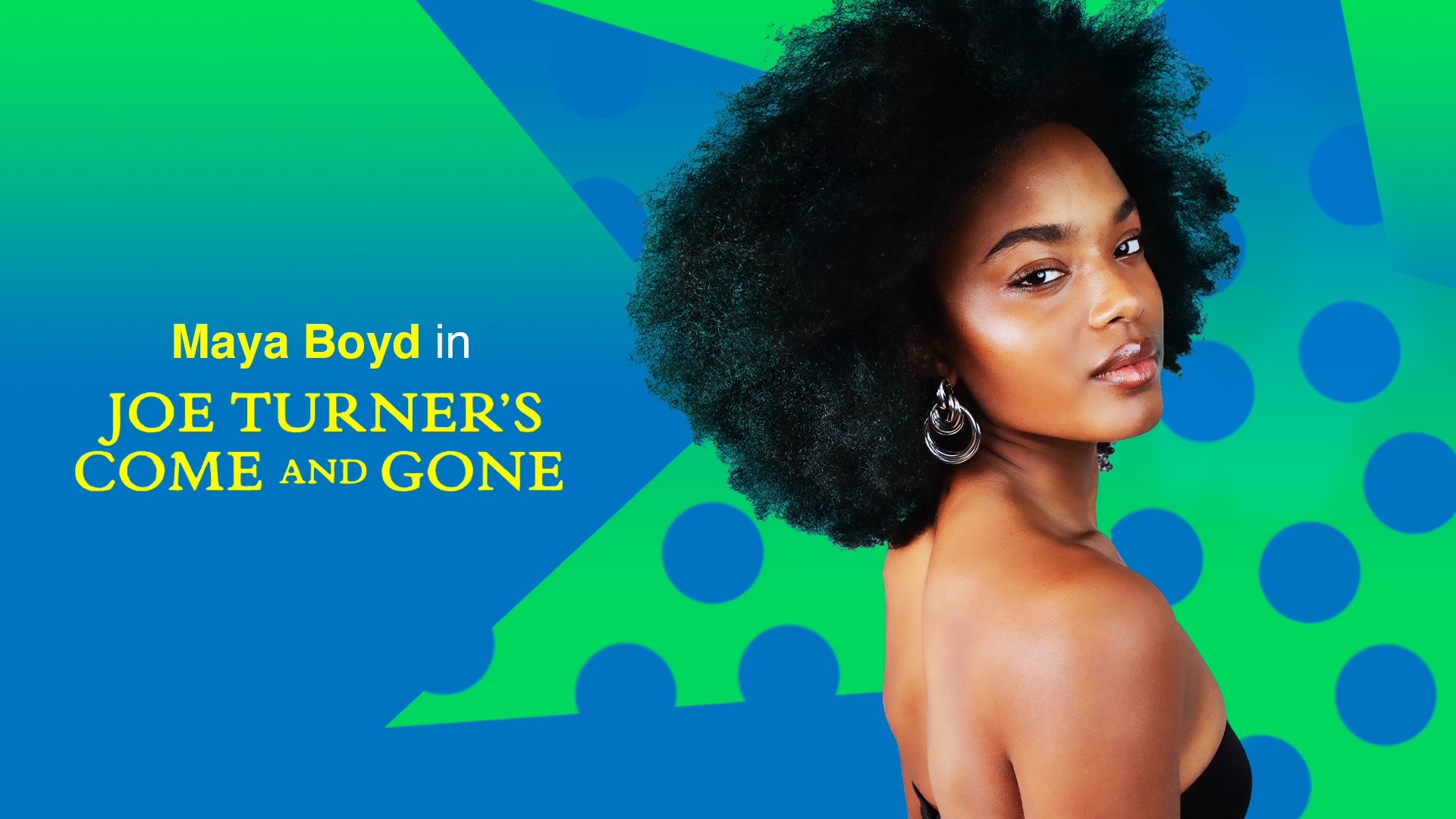
Maya Boyd has had a busy few years. She made her Broadway debut in Maria Friedman’s Tony Award-winning revival of Merrily We Roll Along while she was finishing her senior year studying musical theatre at the University of Michigan. She belted eight shows a week in the title role in & Juliet. Now, she’s ready for her next challenge: her first straight play on Broadway.
Boyd plays Molly Cunningham in August Wilson’s Joe Turner’s Come and Gone directed by Debbie Allen. Theatrely caught up with Boyd to talk about her chance meeting with Allen when she was a young dancer, her love for August Wilson, and finishing her senior year of college on Broadway.
Our conversation has been edited and condensed for clarity.
I'm curious what initially drew you to this project and how you got involved.
August Wilson is just a legendary playwright. I think he is the Shakespeare of our time, truly. I mean his material is so rich in history, culture, depth, so that was something that I learned and knew about in college when I was studying musical theatre.
I also saw that Debbie Allen was directing. This is a funny story, I love to tell. When I was 13, I'm 23 now, I did a summer intensive at her dance academy in LA. When I was 13, I just danced [...] I never even thought about musical theater or acting and or really singing. I did [Allen’s] dance program, and I remember meeting her in the flesh. She came to one of our classes, and that was a big deal. You know, the Debbie Allen is coming to your class. I think we're in ballet or either jazz, and she makes us get into a line, and she's like, “all right, sing something.” And I was 13. I've never sang in front of anyone that weren't my sisters who maybe heard me on Photobooth. [Allen] was the first woman, or person besides my family, that I had to sing in front of. I remember being so nervous. I'm like, “I don't sing like that.” I remember her telling me something about me being very quiet, and that comes in later.
Thinking about myself now as a 23-year-old, a decade later, having life take its course and not seeing her sense that summer, I sing and act and dance for a living, which is such a crazy thing to think about. She was also the first woman who introduced musical theatre history. To be able to dance in the showcase that summer we had to pass a quiz, and it was about musical theatre history. [...] She planted a seed; I had no idea I would end up doing musical theatre for a living. I really thought I would either be a dancer or a businesswoman slash doctor, because my parents are not in the arts. They're very academic. And all my sisters are very creative, but I'm the youngest, so they all stopped their creative passions to do something. Academic or pragmatic, if you will. So yeah, I took a big leap of faith going to school to get a BFA in musical theater.
So when I saw that [Allen] was directing this play, I'm like “oh my gosh.” When we met in the room, she remembered me from when I was 13 and she had me sing in front of her. I'm like I “can sing now, I'm confident in my singing ability.” Doing & Juliet, I can call myself a singer. It's just like very, feels like there's divine intervention and a visible string happening here
You mentioned coming out of school pretty recently, how has the transition to post-grad in this business been for you?
Such a good question. My first musical was my senior year. I did both Merrily We Roll Alonb as an onstage swing and I understudied Gussie. I was able to get credit for it, but it was one of the hardest things I've ever done. I think it was one of the best decisions I could have made because it allowed me to stay in this student mindset to really take in what I was learning. Having my first professional gig in musical theater at all be on Broadway with that cast, my first example of how to conduct yourself as an artist and a professional was a great example.
From there, within that year, I booked & Juliet. It was a snowball effect. Having taken classes back at Michigan at the same time and just being in that state of learning. I think I really just absorbed so much and learned so fast and it really just helped me be able to have a mindset that allows me to learn no matter what. There's so much you learn working professionally that they don't teach you in school. It was a lot at once, but it’s very compatible with how I like to learn. I like being busy and having things to do, so it worked out perfectly. And swinging is a whole ‘nother thing, but I tell, you know, I've told directors when I was auditioning, and I'll say to anyone, if I swinging and understudying and growing my way up really helped me be able to lead & Juliet and being a principle in this play. Each experience that I've had so far in my career has been so paramount in my journey as an artist and a professional, including being a student at the same time.
You mentioned you really wanted to do a play, this being your first professional play. I'm curious what drew you to wanting to do plays in general and if there's anything about your process that has shifted from musicals to doing straight plays.
Totally, completely different process. I've learned, I'm learning. Musicals can be incredibly difficult because yes, you're acting through song, which is a different technique, as well as dancing if you're required to dance. It has a lot of moving parts. However, at the same time, with those different mediums that you're doing at once, you have the fluidity to lean on one thing over the other at times. [...] Where with a play, especially this experience specifically, has been a lot more challenging for me because you don't have the other components. It's just you and the text and your colleagues that you share the stage with. It feels a lot more vulnerable. I wanted the challenge. I wanted to really understand how I work with just text. It's my first time, and I have to be patient with myself that this is a different process and I'm learning what it is. And I like to use the saying, I'm figuring out tools for my toolbox as an actor and you have different tools for each medium you're in.
On the theme of the learning process, you've said you've learned so much through this. What are some of the biggest lessons that you think you've taken away from this so far?
Oh my gosh, patience, for sure, patience. Presence, there's so much power in being present and understanding what that feels like. I think a huge lesson too, is the importance of warming up and cooling down and your body, just taking care of your body. Your body is such an important aspect of what we do. It's not in your head, it's your whole being. So warming up my body, cooling down your body has been something I've been really much more intentional about.
What are you hoping that young people your age might take away from this play?
I definitely think this play will have something everyone can resonate with. I think what I would love people to feel is connected to us on stage and to the story. I think the story is a bit of a mirror of what we are experiencing today. Every aspect, personally, nationally, globally, like it really does transcend. So I just would love people to kind of leave with a new perspective or a question that they want to ask someone or to talk about with a friend that they saw with, other mom or whoever, after this play because I think it is there's so many themes in this play that I feel like we all have experienced in a different way and I think it's just told so beautifully. So I would love people who are my age, younger and older and any, really all of all ages to leave with a new perspective. And honestly, I like, I feel more, I think too, like more leave with the question, a new question or a new thought that they wanna explore with this play.
On a day off, is there anything else this season that you're looking forward to seeing?
My friend is in Gotta Dance at Stage 42. Can't wait to see that. Cats: The Jellicle Ball.


