


Audrey Heffernan Meyer and Alan Ceppos Chat ART OF LEAVING

How do you know when it’s time to leave?
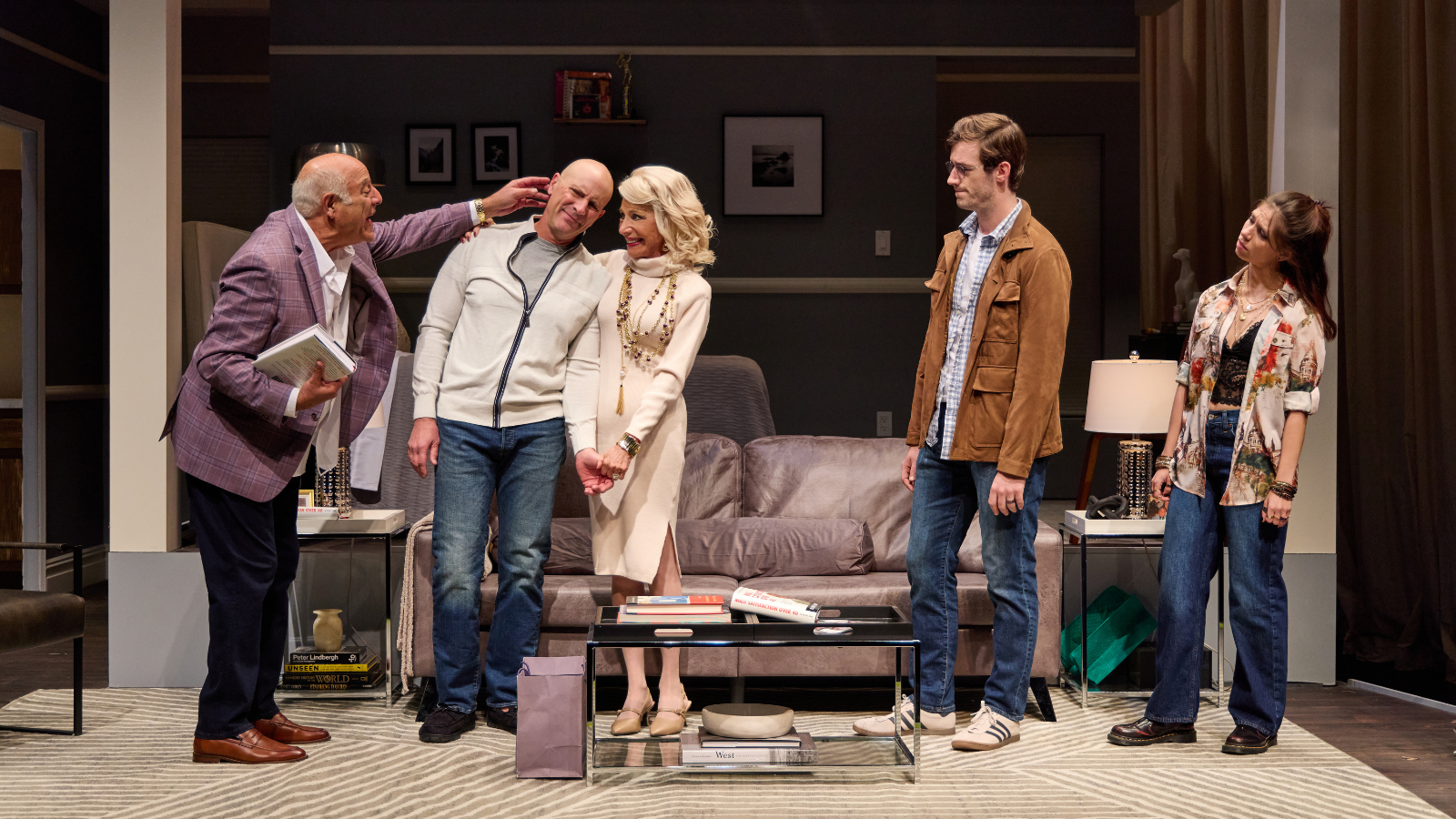
Described as Neil Simon-meets-A Doll’s House, Anne Marilyn Lucas’ new comedy Art of Leaving is a razor-sharp look at a marriage in crisis. As the play begins, Aaron (Jordan Lage) shocks his wife Diana (Audrey Heffernan Meyer) by asking for a divorce—though not before declaring she has “never been sexy,” smiles too much, and needs to act less happy.
Soon, the whole family gets involved, including Aaron and Diana’s son Jason (Brian Mason), whose fiancé Caitlyn (Molly Chiffer) believes in polyamory; and Aaron’s parents, Esther (Pamela Shaw) and his father Felix (Alan Ceppos), who has some surprising insights to offer.
Art of Leaving is now at The Pershing Square Signature Center, following a run at Theatre For the New City in March 2024. Theatrely sat down with Meyer and Ceppos to discuss the development of Art of Leaving, generational divides around marriage, and the play’s cathartic ending.
THEATRELY: Audrey, tell me about your history with Art of Leaving.
AUDREY HEFFERNAN MEYER: Anne [Marilyn Lucas] first invited me to do a reading a couple years ago. She wanted me to play the role of Diana, a character Anne had modeled after herself. I immediately found the play so compelling. It starts out so absurdly—you can’t even believe the things this narcissistic husband is saying to his wife, and yet you also understand why she wants to stay with him.
How did Alan and the rest of your six-person cast get involved?
AUDREY: We met in February of last year when we started rehearsal for the run at Theatre For The New City in the East Village. Alan and I both thought this piece should be seen by more people. So we got together and spearheaded this thing, and said, let’s bring this to off-Broadway.
Along the way, you also workshopped the play with readings held for charity.
ALAN CEPPOS: We thought it was a good idea to bring the play somewhere and get audience feedback, so we went to LTV Studios in East Hampton. That reading was also a benefit for Ellen Hermanson Foundation’s work with breast cancer.
AUDREY: Those readings really helped us delve more deeply into some of the characters. We got feedback from people saying, “We don’t really know enough about why Diana puts up with this guy.”
What adjustments were made to explain Diana and Aaron’s connection, despite some of the crueler things he says to her?
AUDREY: This time around, we really played up the sexual attraction they still have for each other. I think that helps a lot, to understand that attraction. They’ve had a child, they’ve been together a long time. She’s still in love with him. He’s saying he’s not in love with her, but he kind of is, he just…he’s got some problems, this guy.
We also worked on making Diana stronger. Instead of her being a dishrag, or a doormat. The first time around, I was kind of directed to play it like that, and I said: “That doesn’t feel right to me.” She’s a smart woman, she’s an assistant curator at The Met. Now, in the middle section, I argue with him a lot more and give him his shit right back.
Alan, your character confesses to his son, Aaron, that he had an affair himself. But he frames it as a warning to not repeat his mistakes.
ALAN: He’s trying to make his son understand that it’s important he stays with his wife. As he says, he never got caught, but he’s had a happy marriage ever since.
AUDREY: So he thinks. He did get caught, his wife of 59 years has his number. But she doesn’t tell him, because the marriage is more important to her. That’s the attitude of the older generation. Whereas Diana is saying, yes marriage is important, but - I gotta leave this guy. And meanwhile Diana and Aaron’s son Jason is marrying a woman who believes in polyamory.

The three generations all have very different attitudes about marriage. Have the audience reactions also been divided by generation?
ALAN: We see an amazing difference. Everyone relates to this play, every generation. Younger people understand it completely as talking about their lives. The older generation relates to it more personally – when you’re 50 and above, and you’ve been married a long time, everyone has issues in their marriage, and they see that reflected in the play.
AUDREY: It’s an important topic to be discussing. How do these couples treat each other in three different generations in one family? It’s one of those kitchen sink dramas that we all were brought up on in theater and acting school, that you don’t see so much anymore. How shocking was A Doll’s House at the time, that she would walk on him? And there’s really a similar reaction this time around. So the piece is very classic in its structure, and yet quite shocking.
Any long marriage is going to have some very dark moments along the way, moments where you might say some horrible things to each other. But Diana eventually says, enough is enough.
AUDREY: So many women meet me with tears in their eyes after the show, and say, “I was married to someone like that, and they said those kinds of things to me, and I tolerated it for so many years.” Some tell me they did finally leave; others will say, “I didn’t leave, and I wish I had, I wish I was as brave as Diana.” It’s really getting to people, and it’s so moving for me when I see that and feel that.
I grew up in a household where my parents, unfortunately, fought a lot. My dad was not nice to my mom. That’s an understatement. But, they stayed together, until finally after 33 years she said, “I’m outta here.” 33 years! But for that generation, that’s what they did. You just tried to make it work.
So when Diana leaves, I feel like I’m doing that for my mom, in a way? Without going into too much detail. But it just feels like, yeah, finally. Diana is saying: “I love you, I’ve tried to make this work, I’ve tried to put up with what you say to me, to maintain my dignity and character, but—enough.”
And for Anne, the playwright, it was very cathartic for her to write that, because she didn’t leave her husband even though he said, really verbatim, a lot of these things to her. She just kept thinking, “Oh it’s my fault, I’ve got to fix this.” So she wrote this play as a way of getting that out. As a catharsis.
Art of Leaving continues at The Pershing Square Signature Center through December 14. Purchase tickets here.


