


Kayla Davion Knows LIBERATION Changed Her Life
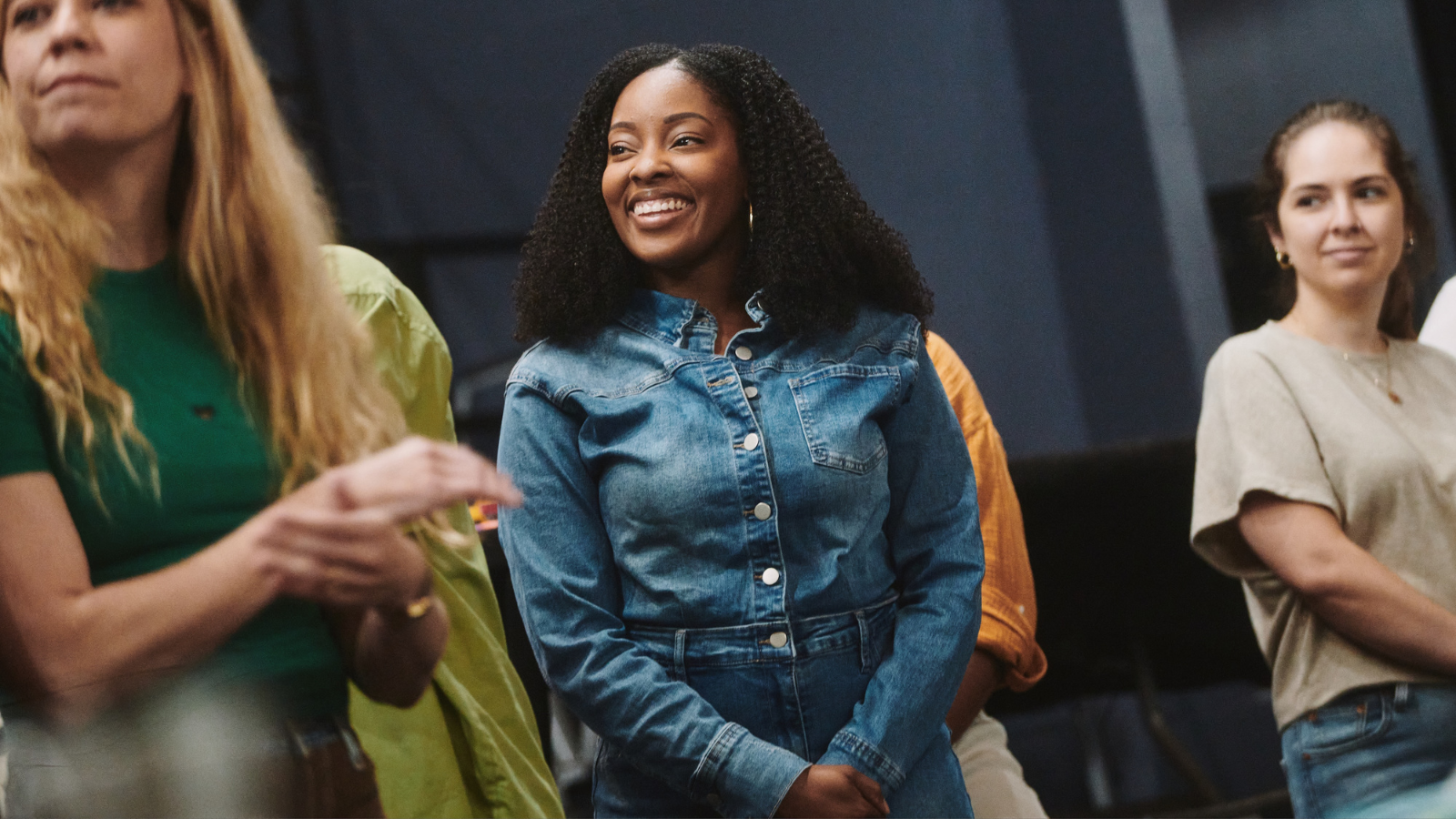
To fully conquer her uniquely challenging dual role in Liberation, Kayla Davion had to confront a surprising challenge: opening herself up to love.
Even within a piece as delicately wrought and emotionally complex as Bess Wohl’s critically heralded new play, which ends its Broadway run this Sunday, Davion gets an especially tricky task in taking over the lead role of Lizzie (normally played by Susannah Flood) for one pivotal scene.
Best known for her work in Elf and Tina: The Tina Turner Musical, Davion makes her New York City play debut as Joanne, a mother of 4 who stumbles into the women’s liberation group that provides the play’s center. A former civil rights activist herself, Joanne spars with Celeste (Kristolyn Lloyd), the group’s sole Black member, around questions of solidarity within a majority white collective.
Joanne (and by extension, Davion) also steps into the lead role of Lizzie, the group’s reluctant leader, for one scene. And that was the scene that, for Davion, demanded a softness that at first did not come naturally.
As the run of Liberation comes to a close, Davion sat down with Theatrely to reflect on the experience.
New York audiences will know you best from your work in musicals—most recently Elf and Tina: The Tina Turner Musical. What has it meant to make your New York play debut?
I have always wanted to do a play, but I never thought it would happen for me. To be coming from Elf, a cheery Christmas musical about heart and love, into this feminist piece was kind of wild. I am still so grateful to Whitney White and Bess Wohl for taking a chance and seeing what I had to offer.
It was also scary, to be honest. I was legit terrified. What helped make it a safe space was being in the room with Kristolyn Lloyd. When I first got into the industry, I was obsessed with Kristolyn. And she would give me free tickets to come see her in shows. It was a full circle moment to now be acting alongside her, because she has inspired me so much.
What was different about navigating a play, in terms of your approach as an actor?
I grew up singing. It’s who I am, it’s the freest expression that I can give. Acting came later, when I had to learn how to speak in my own voice. With music, there is an emotional tie that is already put on the music. So how do I create an aria with this play? How do I create my musical arc in my scenes? What is the bridge for me? I had to use different language in order to tap in.
How did you work collaboratively with playwright Bess Wohl and director Whitney White in shaping the character of Joanne? What kind of research did you do?
Whitney was very good at setting aside time with each individual actor to figure out what they wanted to draw upon. She gave us all assignments: “You look up civil rights, you look up music in the 70s, you look up…” I was like, oh we’re doing homework! Okay, alright!
When we were off-Broadway, me and Whitney focused on how to stand in your feminism. Confidence in the sexuality and the sensuality of this character. So we looked at Pam Grier, who played Foxy Brown—that was my main go-to when we were off-Broadway.
For Broadway, we switched gears and dove more into Joanne’s background. She says in the play that she was a civil rights leader earlier in life, she was part of that fight. So I looked at [civil rights activist] Diane Nash, I looked at Amina Baraka—she was an actress, but also was an activist. The overall focus was: “What are the conversations that Black women were having in the ‘70s?”
There are some incredible videos out there. I watched clips from Black Journal, a talk show with this circle of Black women just talking about what it means to be free. Baraka was on that, and [journalist] Joan Harris, and [poet] Nikki Giovanni, talking about what they see as a society for Black people. Obviously, we don’t see that in this play, but I needed to sit in that basis and that foundation of where Joanne started.
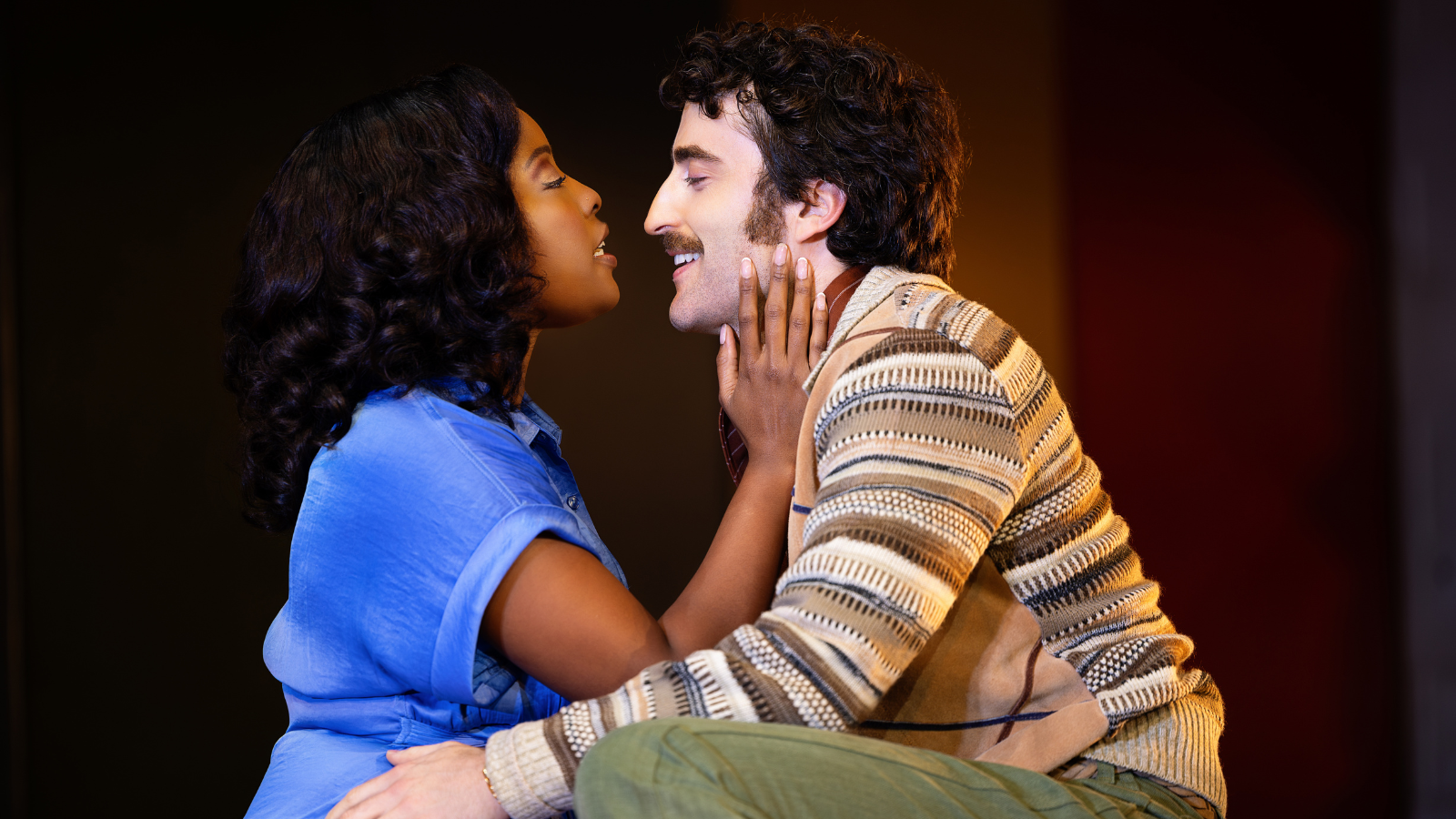
Your trickiest assignment is taking over the role of Lizzie, the center of the play’s ‘70s set narrative, for one scene. Normally her daughter and our contemporary narrator, also named Lizzie, has been playing her own mother. She passes the baton to you for an intimate moment with Bill, her father. But you don’t really “play” at being Lizzie—it’s still very much your character, Joanne, who is experiencing this scene.
In the beginning, I had so many questions. I was like: “Y’all want me to be a white woman?” Then I’m trying to decipher how I think white women act…and that is a whole other topic in itself. Do I need to pick up some of [Susannah’s] “–isms”?
But no, it was not playing at something. Whitney always said to me: You are an actor in your body, stepping into a role. You’re always going to bring that foundation with you.
The biggest challenge [of that scene], for me, was learning softness and sensuality with a partner. That may come easy to some, but I had such a hardened exterior growing up that the vulnerability of softness, of love, is not always the easiest for me to show. So finding my softness as a Black woman was a big thing that we worked on. When I wasn’t getting there, Whitney would be yelling at me, “Kayla!” [laughs] And I’d be like, “I’m sorry! I swear I’m trying Whit!” She’d be like: “You can love, you can be loved, you can show it physically, your body doesn’t have to get stiff when you encounter what love feels like!”
It’s such a tricky duality—you are playing the love that Lizzie’s mother had for her husband, but at the same time, you are also playing Joanne discovering and experiencing the depth of the love that these two felt for each other. A discovery Joanne then tries to impart to our narrator after stepping out of the scene, so she might understand her mother a bit differently.
Joanne witnesses, from being in Lizzie’s body, this tug of war. There is joy to love, but there’s also chaos in love. How do you explain that to this girl who just watched her parents argue, who felt like her mother was under a “magic spell”? She’s assuming from the jump that there’s something her father took away from her mother. But Bill is saying: “I’m not taking this away from you; I want to be in it with you.” Lizzie comes in thinking that love and activism are two separate worlds. But he’s looking to combine them.
I love that scene, I really do. It’s beautiful to remind yourself that love comes in so many different forms.
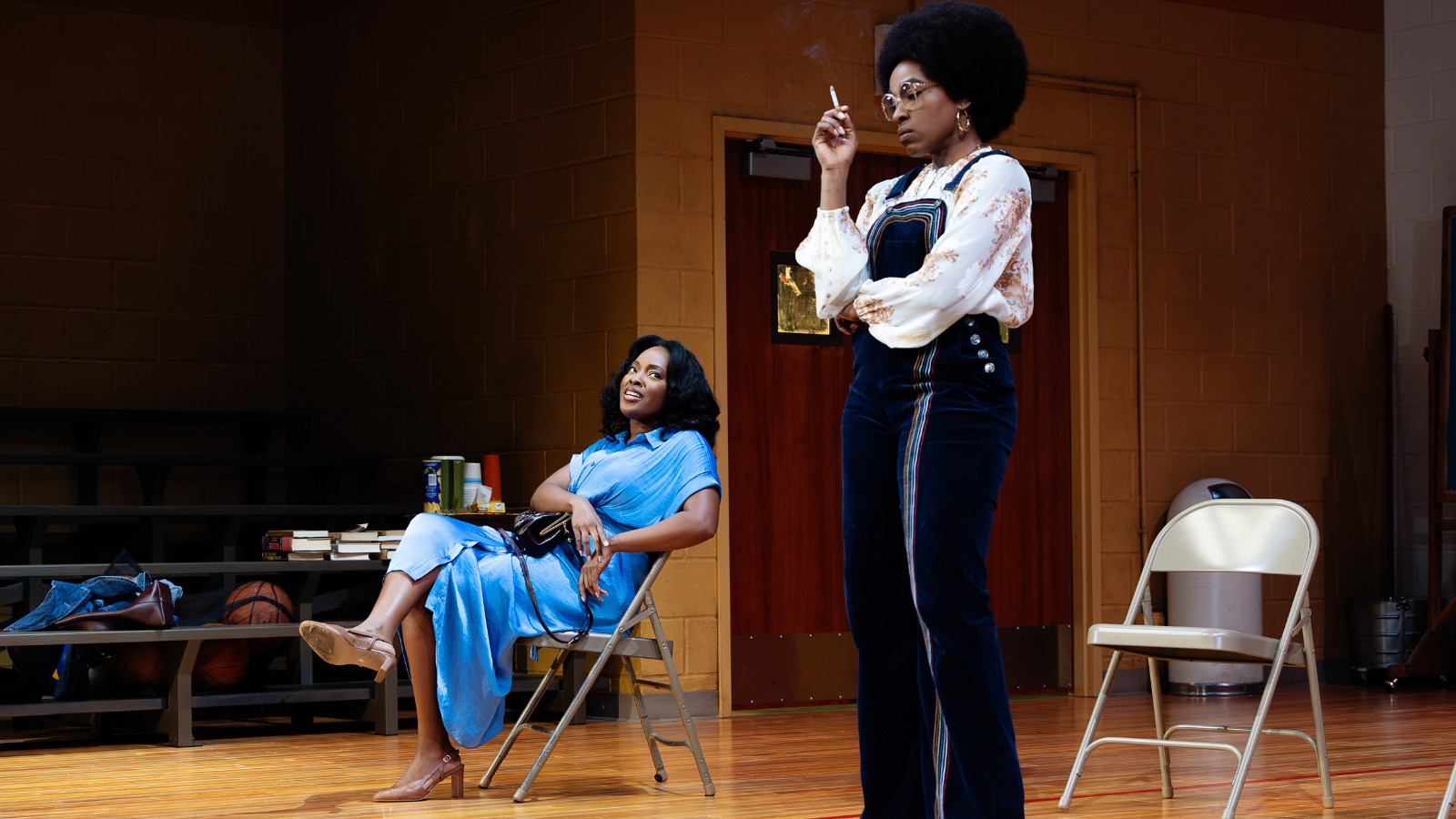
Then you shift right into a fierce debate between Joanne and Celeste, the two Black women on stage, about their place in the feminist movement of the time. Joanne is challenging Celeste on whether these white women can ever truly be in solidarity with her. But even though Joanne is unsparing with Celeste, I always felt like it was coming from a place of love?
I’m honored that you see that, because that’s the main thing that me and Kristolyn try to make sure is in it. Joanne could walk away at any point, or we could be legit fighting at any point in this argument, if it were not to come from a place of love. From Joanne’s aspect, it’s all about: I want you to be free, and I don’t want you to have to play to any of these other women. I see that you’re educated. I see that you’re smart. And what else? Let’s go for freedom. The tough love is hard, it’s so hard! But so necessary.
You and Kristolyn have done this scene together so many times now. Have the two of you found new shades or subtleties to it together over the course of this Broadway run?
Me and Kristolyn find new stuff every day. I love doing that scene with Kristolyn because there’s a comfortability of Blackness, where we’re just like: “You wanna go for it? Let’s go for it.”
There’s a new thing we do when Joanne and Celeste both say “Had to be!” in unison about their mothers, how tough they both were. We found this moment on Broadway where we both say it, then look at each other and go: “Oooh.” This moment of recognition.
How are you reflecting on your time with Liberation, as you near the end of the run?
I feel a little sad. This is one of those plays that has really changed my life, in so many ways. In my research of the times before us, in my person and how I move through the world now in my vulnerability and my softness. That has been really amazing to experience. I feel like it’s opened me up. I don’t want to be that person to say, “I’ll never do anything like this again,” but it feels like that.
What’s next for you? Anything you can tease right now?
I can’t tease a thing. But just know, I’ll be coming back. I’ll be back.


