


JOE TURNER’S COME AND GONE Still Packs A Punch — Review
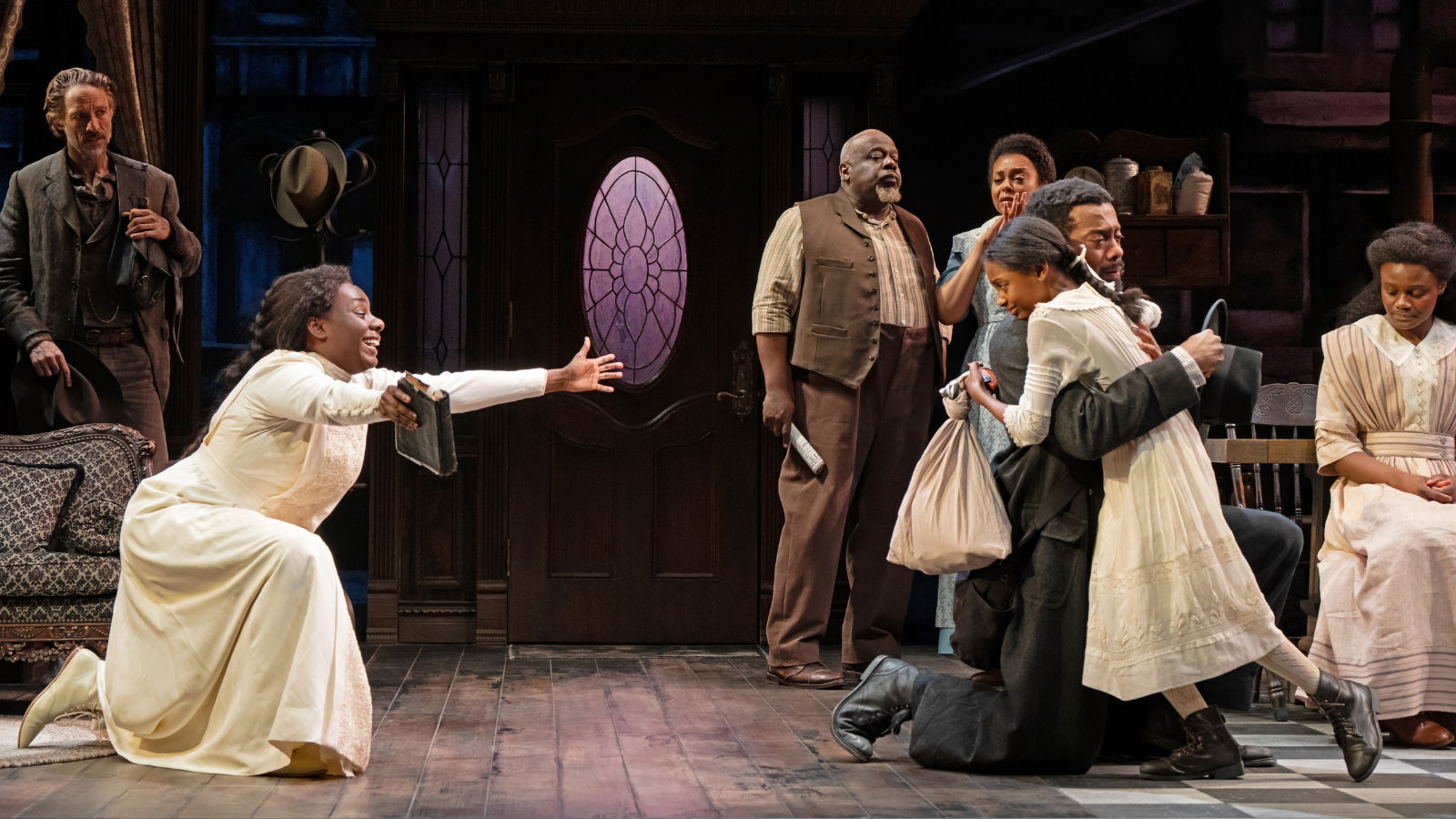
Is August Wilson’s Joe Turner’s Come and Gone a hangout play?
In its conception, perhaps not. Written in 1984 as the second installment in Wilson’s celebrated “Pittsburgh Cycle,” Joe Turner delicately unfolds the backstories of several troubled residents at a Pittsburgh boarding house in 1911.
Contemplative in tone, it is certainly one of Wilson’s quieter works. Yet the play probably shouldn’t feel like an extended chill-out session, as it frequently does in Debbie Allen’s new Broadway staging. Softness slides into sleepiness in this unremarkable revival, now at the Ethel Barrymore Theatre, which never comes to life despite several intriguing performances.
Under a sharper directorial hand, even Wilson in a softer register can hum with disquieting intensity. Ruben Santiago-Hudson’s superb 2017 revival of Jitney dialed into that frequency expertly and pulsed with energizing life. And while LaTanya Richardson Jackson’s spooky 2022 staging of The Piano Lesson was a tad overwrought, it similarly buzzed with the piquant vigor of Wilson’s evocative dialogue.
Jackson and team also conjured an otherworldly presence in Piano Lesson, that intangible plane of existence just outside of our own. By contrast, Allen’s staging of Joe Turner is earthbound to a fault, floating by with an easy-breezy energy that often baffles.
The issue is most pronounced around our ostensible leads, patriarch Seth Holly (Cedric the Entertainer) and his wife Bertha (Taraji P. Henson), who together manage the boarding house. The Hollys are the most stable and grounded figures in this story, having found mutual comfort and shared purpose. But here, Seth and Bertha too often feel like background players, only vaguely concerned with the various dramas passing through their home. Mr. Entertainer is playing it chillaxed; and while Henson is stronger, her rousing delivery of Bertha’s moving late monologue about life’s purpose (“All you need is to have love in one hand, and laughter in the other”) feels like the first and only time Bertha is allowed to own the space.
.png)
Among the passers-through in the Holly home, a strong array of performers find various degrees of success. It is the grounded, intimate side stories that find a place easier in Allen’s production. So the play’s two young women stand out the most: sweetly Mattie Campbell and self-sufficient Molly Cunningham. A heartbreakingly gentle Nimime Sierra Wureh is excellent as Mattie, while a sharp-edged Maya Boyd steals a few scenes as Molly. Both enjoy a sharp repartee with quick-tongued womanizer Jeremy Furlow, likably portrayed by Tripp Taylor.
The men of this story carry burdens of a more spiritual nature, and these actors have a harder time in a staging that does not look to conjure ghosts. The invaluable Santiago-Hudson, as local hoodoo practitioner Bynum Walker, is a seasoned interpreter of Wilson’s work, and delivers Bynum’s winding monologues with natural ease. Yet excellent as he is, Santiago-Hudson feels like he’s in a different production all of his own.
So too does Joshua Boone as the mysterious and often menacing Harold Loomis, the beating heart of Wilson’s play. Traumatized by seven years of forced labor under the hand of white “mancatcher” Joe Turner, Loomis is seeking absolution and a new place in the world. Boone is terrific in the role, fiery and brutishly intense. His Loomis is a genuinely frightening figure—Boone does not shy away from the character’s instability, even as Loomis’ essential goodness always remains palpable.
But as with Walker, this production lets down the character of Loomis a bit by neglecting the play’s deep connections to that other plane of existence. Both characters look to find “their song,” a path that leads them to shared visions of, “Bones rising up out of the water” and then swept violently to shore.
Allen and her designers only engage visually with these apparitions when the text absolutely forces it. The lighting, by Stacey Derosier, is resolutely naturalistic except at each act’s conclusion, when it goes haywire a bit too abruptly. David Gallo’s set has nothing non-literal to offer, attractive as it is. Allen instead leans heavily on musical underscoring by Steve Bargonetti—but this mostly creeps in to heavy-handily underline or highlight dramatic moments.
For all its issues, this Joe Turner still packs a punch once that final scene arrives. Effective buildup or no, Wilson was a master at a shattering conclusion.
Joe Turner’s Come and Gone is now in performance at the Barrymore Theatre on West 47th Street in New York City. For tickets and more information, visit here.


