



Review Roundup: PRE-EXISTING CONDITION + THE BODY OF MARY
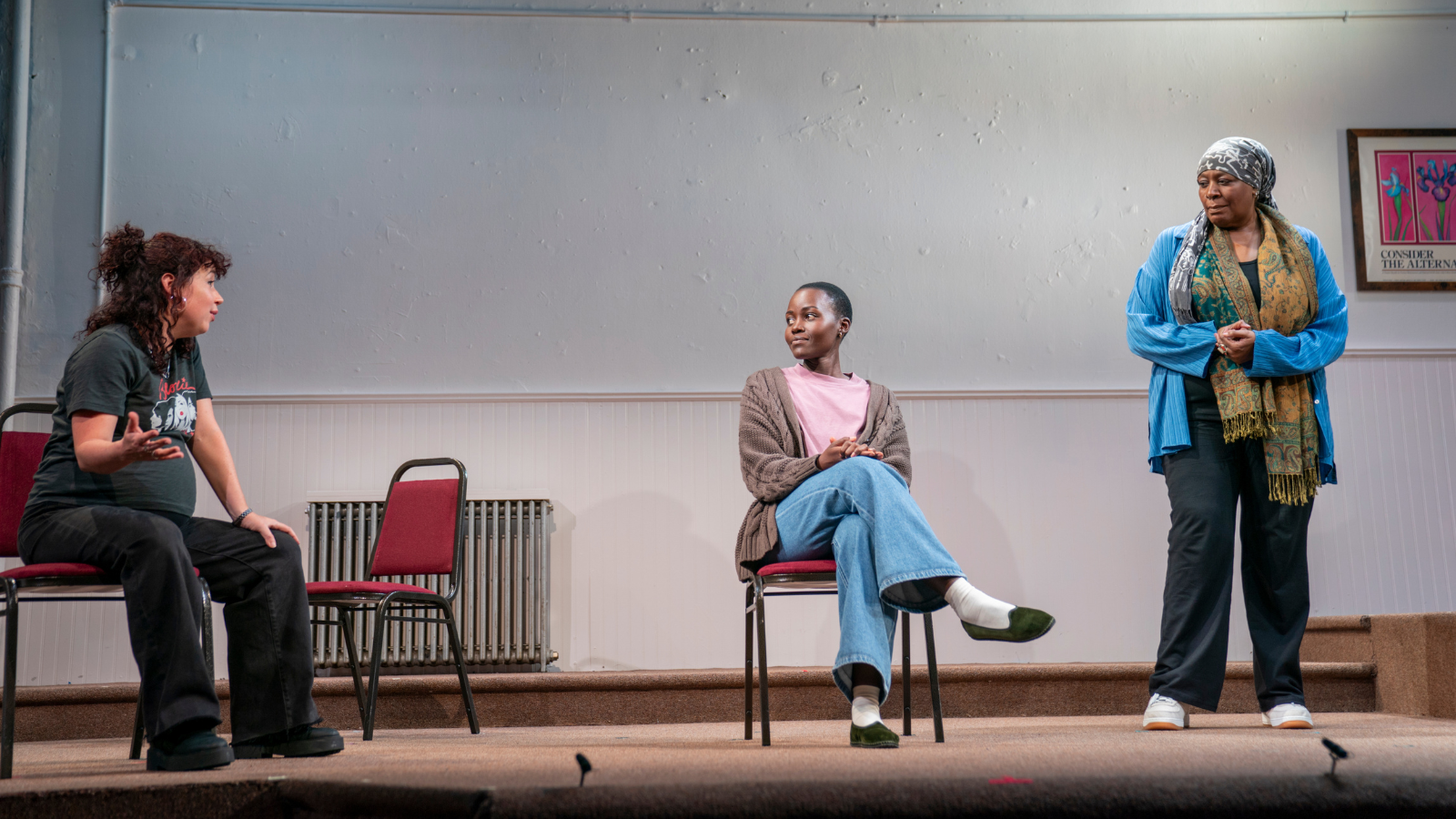
Our senior critic Joey Sims on two plays Off-Broadway right now:
I saw Pre-Existing Condition twice at the 60-seat Connelly Theater Upstairs, where Marin Ireland’s searing one-act debuted in 2024. Rarely have play and venue felt so perfectly matched. The audience’s close proximity to “A,” the shattered figure at the center of Ireland’s confessional work, lent director Maria Dizzia’s staging a sharp immediacy. I often felt closer to fellow patient than observer, traversing the bumpy path to recovery right alongside “A.”
So it’s hard for me to disentangle this return engagement of Pre-Existing Condition, now open at Greenwich House Theater in the West Village, from that Connelly run. And I do feel that in the move to a 199-seat proscenium space, something ineffable has gotten lost. But if the power of Dizzia’s staging here feels diluted, Ireland’s play remains a brave and expertly crafted piece of writing.
Moving between coffee meet-ups, messy dates and group therapy sessions, Pre-Existing Condition traces one woman’s recovery journey after an incidence of domestic violence. As in the 2024 run, “A” is set played by a rotating cast of actresses. Academy Award winner Lupita Nyong’o kicks it off through September 26; on deck are Phillipa Soo, Susanah Flood, Hari Nef, Edie Falco, and Whitney White.
Ireland’s text negotiates a tricky balance between specificity and universality. In having “A” played by multiple actresses and declining to give her a name, Ireland is emphasizing the tragic commonalities in her recuperation from trauma. “A” blames herself. She is shame-ridden. She is failed by a flawed legal system. Friends let her down—not all of them, but some. Through it all, “A” pushes on.
Yet Ireland also drops in small touches and little quirks that ensure “A” is more than just archetype. Nyong’o has particular fun with the character’s wry humor. Her “A” often seems bemused by her own situation, greeting cruel comments (like a “What did you do?” from a man learning of the incident) with sardonic fascination. Of course, that detachment also stems from dissociation—“A” is unstuck in time, and Nyong’o captures her resulting numbness with careful precision.
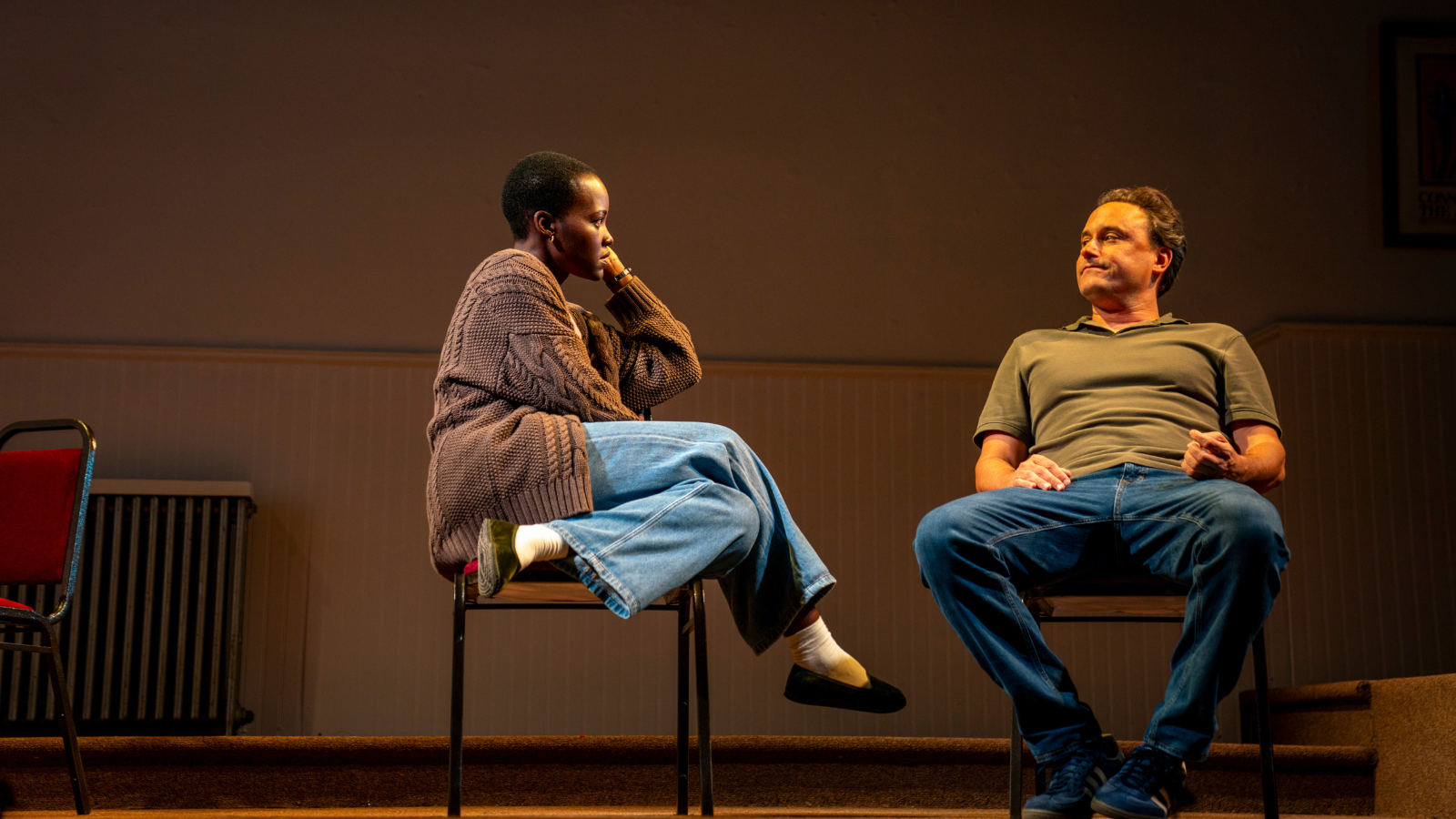
But it is the character’s connection to us, the audience, that now feels confused. I especially struggled with group therapy scenes that anchor Ireland’s play. As in the Connelly version, the two group facilitators (an inviting Sarah Steele and a composed Dael Orlandersmith) address their guidance outward and pluck answers out of our silence. But the device no longer makes sense. Our role, out in the dark and removed from the action (a reality of the Greenwich House layout), now feels very much like that of an observer. It is a fundamental shift that Dizzia essentially tries to ignore, replicating a number of theatrical gestures that should have been rethought.
Dizzia also struggles to replicate the hazy, unreal nature of her earlier staging. Certainly, Ireland intends that sequential scenes in Pre-Existing Condition should blur into one another. But a purposeful confusion has given way to vagueness. The expanded set, by Cate McCrea, is a little too barren, while Isabella Byrd’s lighting feels static. Some blocking feels uncertain, like the actors are wandering at random. Various elements could not coalesce, and I rarely felt transported into “A”’s murky state of mind.
Nyong’o is a grounding stage presence, and while she can’t quite shake off that movie star sheen, her work here is riveting all the same. (I can’t say she finds much natural chemistry with Greg Keller, but it scarcely matters.) My evident attachment to an earlier iteration of Pre-Existing Condition should not take away from the power of Ireland’s text, nor from the sensitive work of a tremendous ensemble.
—————
Don’t be misled by the title: The Body of Mary: A Play In Three Acts (Of God) is not the grave, self-serious piece the name might suggest, but rather a delightfully stinging evening of absurdist comedy.
True, playwright/director Katie Cappiello is tackling big themes in her zippy evening of one-acts: the cruel fictions of religion, state control of women’s bodies, archaic definitions of “good” motherhood. But Cappiello filters those heady topics through a surreal, farcical lens, an apt approach for this age of stupidity.
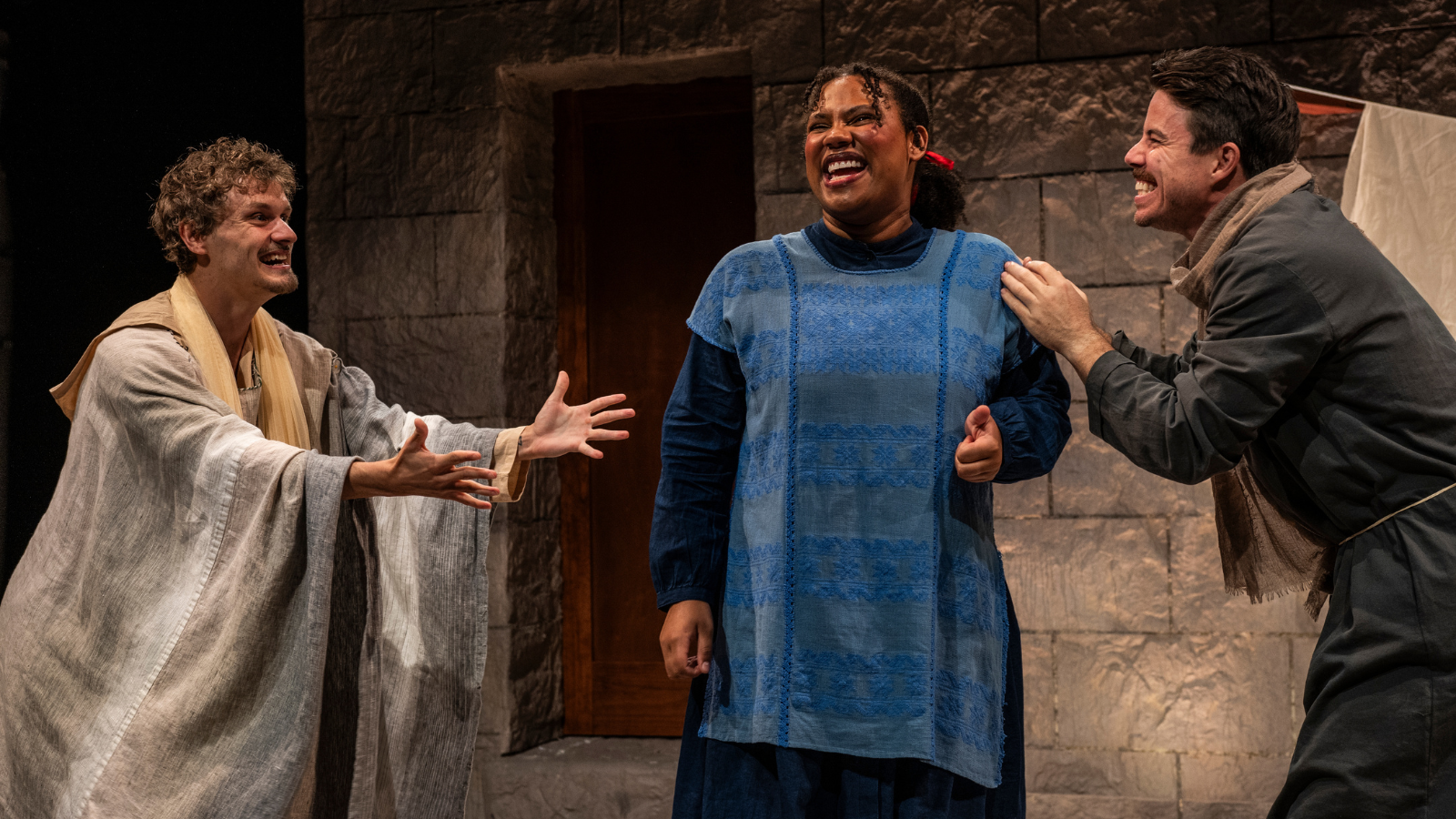
Strongest by far is the first section, “The Virgin,” a brutally hilarious re-telling of Mary of Nazareth’s impregnation. The second one-act of the evening, “The Mother,” overstays its welcome and falls into repetition. Far devastating is “The Dumpster,” Cappiello’s comparatively somber (though still very funny) conclusion. Movingly performed by Gracie Conn, this last tale brings Mary’s story into the present day from an unexpected angle, and left me in a state of deep disquiet.


